
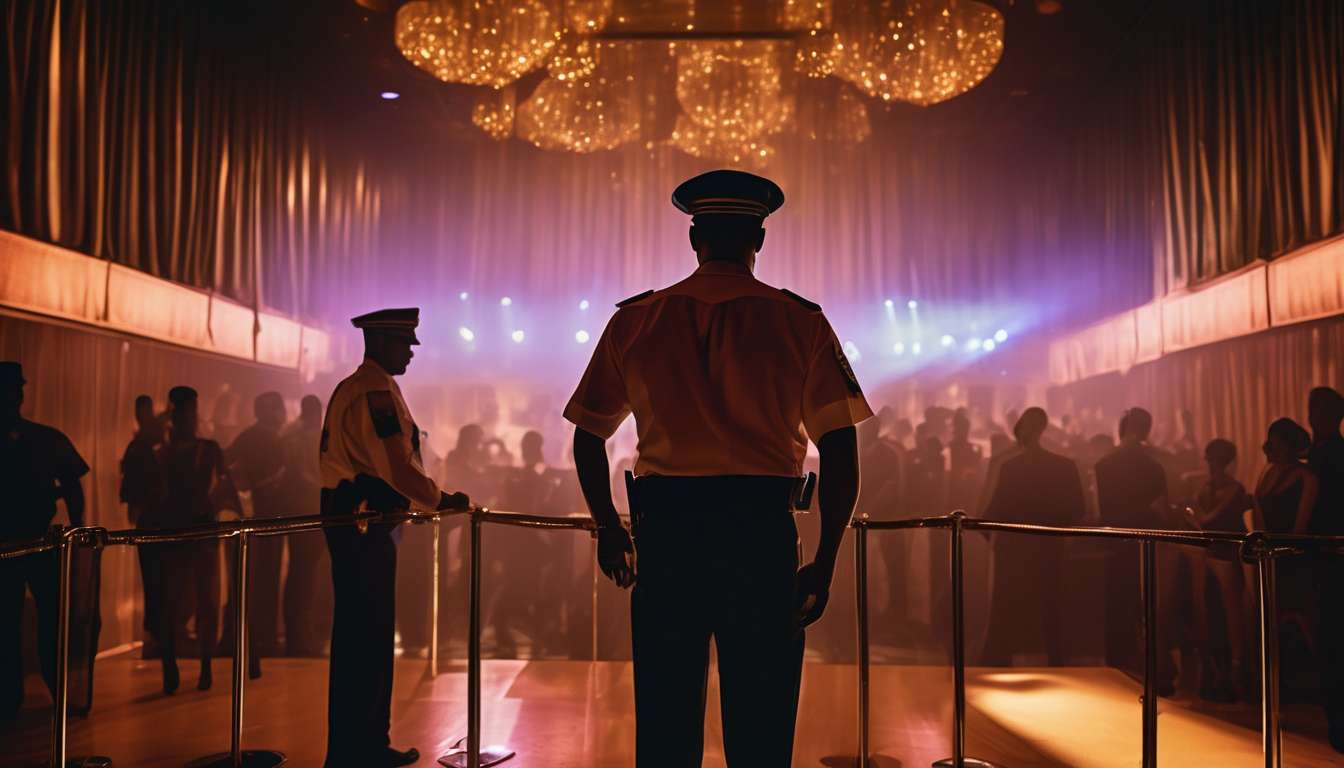
Last month’s high-profile city council hearings and a string of widely shared videos have forced us to confront how rapidly venue security has become central to exotic dancing markets.
As municipalities revise licensing rules and promoters scramble to comply, we navigate a shifting landscape where safety protocols, performer rights, and public perception collide.
We track evolving ordinances, corporate security strategies, and grassroots advocacy campaigns that push for transparent, enforceable standards.
Our reporting examines how new requirements — from ID verification tech to mandatory on-site medical training — reshape day-to-day operations, worker autonomy, and patron behavior.
We consider the economic pressure on smaller venues, the legal challenges mounted by industry groups, and the complex interplay between reducing harm and avoiding criminalization.
By centering voices across the sector, we aim to illuminate practical policy options that balance accountability, dignity, and sustainability in markets that have historically been overlooked in mainstream regulatory debates.
Policy Drivers
We identify the primary drivers of venue security—legal liability, regulatory compliance, patron and staff safety, and reputational risk—to show how they shape policy choices in exotic dancing markets.
We know our community wants clear, fair protections, so we focus on practical measures that balance venue safety with dancer rights.
How liability concerns shape practice:
- Venues adopt surveillance, staff training, and incident reporting to reduce legal exposure.
- Policies are designed to respect performers’ autonomy and privacy while still documenting incidents.
Regulatory compliance and dialogue:
- Regulatory compliance often sparks debate.
- We advocate for transparent dialogue that includes dancers at the table.
Patron and staff safety as nonnegotiable:
- Support protocols such as risk assessments, emergency response plans, and de-escalation training.
- These measures create predictable, supportive spaces.
Reputational risk and proactive standards:
- Reputational concerns motivate proactive communication and consistent enforcement of standards.
Policy goal: sensible licensing reforms
- Push for licensing reforms that reduce harm and clarify expectations.
- Ensure reforms do not sideline workers and instead foster venues where everyone feels valued and secure.
Licensing Changes
We propose targeted licensing changes that simplify requirements, reduce unnecessary burdens on workers, and create clear, enforceable standards for safety and accountability.
Goals:
- Center venue safety and respect dancer rights, not punish vulnerable workers.
- Streamline application steps, eliminate redundant fees, and set uniform compliance expectations so operators and performers know what’s required.
Accessible participation processes:
- Provide training focused on de-escalation and reporting.
- Publish transparent inspection schedules.
- Establish grievance mechanisms that protect confidentiality.
Documentation and oversight:
- Require venues to document basic safety measures and maintain incident logs, enabling oversight without intrusive surveillance.
Worker representation:
- Include worker representation on advisory panels so dancer rights are integral to rulemaking.
Performance monitoring and iterative reform:
- Monitor outcomes with measurable metrics — for example, fewer violations, faster complaint resolution, and improved perceptions of safety.
- Adjust rules collaboratively based on those metrics and community input.
Overall approach:
- Align licensing reforms with community input to create policies that feel fair, enforce standards effectively, and foster belonging across venues and workers.
Security Technology
We’ll evaluate security technologies — like incident logging systems, access controls, and non-intrusive surveillance — that improve protection and accountability without compromising dancers’ privacy or autonomy.
We’re committed to practical tools that strengthen venue safety while honoring dancer rights and the community we share.
We favor encrypted incident logs with role-based access so reports are reliable but restricted to those who need them, reducing misuse and fostering trust.
We support badge- or biometric-free access controls that limit backstage entry without tracking intimate details, aligning with licensing reforms that prioritize safety over invasive monitoring.
We recommend camera policies focused on public areas with clear signage and strict footage-retention rules, co-created with staff and performers to ensure transparency.
We’ll pilot anonymous reporting apps and third-party audit trails to verify compliance and build collective confidence.
- Anonymous reporting apps
- Third-party audit trails
- Co-created camera and access policies
By choosing measured, collaborative tech solutions, we reinforce a sense of belonging and mutual respect, making venues safer and more accountable without sacrificing the dignity and autonomy of everyone who works there.
Performer Rights
We’ll protect performers’ rights by ensuring clear contracts, fair pay practices, and enforceable protections against harassment and retaliation.
We commit to creating workplaces where every performer feels valued and secure, and we center venue safety as a basic right, not an add-on.
We’ll negotiate transparent pay terms, tip policies, and scheduling so dancers can plan and thrive without fear of sudden income loss.
We’ll advocate for dancer rights in local policy discussions, pushing for licensing reforms that remove punitive barriers and instead focus on safety standards and worker protections.
We’ll set up confidential reporting channels, survivor-centered complaint processes, and nonretaliation clauses in agreements so performers can speak up without losing access to community or work.
We’ll train managers to enforce boundaries, document incidents, and collaborate with security to maintain respectful spaces.
By aligning contracts, operational rules, and public advocacy, we’ll make venues places where performers feel they belong, are heard, and can pursue their work with dignity and safety.
Training Requirements
We will require regular, mandatory training for staff and performers.
Topics covered will include de-escalation, consent, incident documentation, and emergency response. This ensures everyone understands expectations and can act quickly when issues arise.
Training sessions will center on mutual respect, clear boundaries, and shared accountability. The goal is for every person to feel seen and protected.
Practical content and methods:
- Role-play and scenario reviews to practice responses.
- Practical drills to build muscle memory for emergencies.
- Clear explanations of venue safety protocols and reporting pathways.
Dancer rights and real situations:
- Training will show how dancer rights are upheld in actual incidents.
- Emphasis on creating a culture where people trust one another to intervene safely.
Refresher courses and compliance:
- Schedule regular refresher courses.
- Tie refreshers to licensing reforms so compliance supports safety, not punishment.
Feedback and curriculum updates:
- Collect anonymous feedback from performers and staff.
- Update curricula with input from the community to ensure responsiveness.
Expected outcomes:
- Strengthened community bonds.
- Reduced harm.
- Venues where professional standards and personal dignity are equally respected.
Economic Impacts
We’ll assess how security policies affect venues’ revenue streams, worker earnings, operating costs, and local economies.
Venue safety measures—like increased staffing, surveillance, and access control—raise operating costs but can boost customer confidence and longer patron visits, which supports revenue.
When we balance investments in safety with fair scheduling and transparent tip handling, dancer rights are strengthened and retention improves, cutting recruitment costs.
Licensing reforms that tie security protocols to permit renewal can create short-term expenses but also level the playing field, preventing undercutting by noncompliant operators.
Weigh whether mandated measures disproportionately burden smaller venues and frontline workers; targeted subsidies or phased implementation help.
Track these metrics to ensure policies don’t erode livelihoods:
- 1. Gross receipts
- 2. Per-shift earnings
- 3. Local employment
By centering dancer rights and practical venue safety, we cultivate resilient businesses and inclusive local economies that sustain us all.
Legal Challenges
We’ll examine the legal challenges venues and workers face when security mandates, zoning rules, and employment classifications collide with constitutional protections and labor laws.
Courts and agencies often struggle to balance venue safety with dancer rights.
We encounter gray areas where well-intentioned public safety measures can conflict with workers’ rights and constitutional protections.
Municipal licensing reforms frequently aim to regulate public safety but can unintentionally restrict expression or livelihoods.
- These reforms sometimes single out exotic dancing venues for heavier surveillance or more burdensome permits.
- When regulation appears selective, constitutional claims commonly arise — especially under free speech, equal protection, and due process doctrines.
Employment classification disputes are central to many legal fights.
- The question whether performers are employees or independent contractors affects:
- Wages and minimum wage compliance.
- Entitlement to benefits and worker protections.
- Responsibility for training and security protocols.
- Misclassification can shift liability for workplace safety and create enforcement gaps.
We challenge policies that single out exotic dancing venues and advocate for neutral, evidence-based regulation.
- The goal is to protect both patrons and staff without imposing discriminatory or unnecessary burdens.
- Legal arguments often focus on demonstrating a lack of tailored evidence justifying heightened regulation.
Practical legal strategies we recommend include:
- Careful and consistent record-keeping of incidents, communications, and enforcement actions.
- Collective bargaining where workers can organize and negotiate safety and classification terms.
- Targeted litigation to test and clarify constitutional and labor-law boundaries.
- Advocacy for licensing reforms that center venue safety while preserving dancer rights and livelihood.
Together we can pursue predictable, fair rules that respect community safety and labor dignity.
Community Advocacy
We organize with neighbors, workers, and policymakers to build community-led solutions that improve safety, reduce stigma, and protect livelihoods.
We meet regularly to listen, share experiences, and set priorities around venue safety, dancer rights, and licensing reforms.
We form coalitions that include performers, venue owners, local residents, and advocacy groups so decisions reflect everyone affected.
We campaign for clear, consistent licensing reforms that remove arbitrary barriers and make compliance practical, not punitive.
We push for policies that center harm reduction, including:
- Better lighting
- Trained security
- Non-punitive reporting systems
- Involvement of dancers in policy design
We lobby for legal protections that recognize performer autonomy and safety as civil rights, and we support legal aid for workers facing unjust enforcement.
We hold community trainings and healing spaces to build trust and resilience.
We measure success by reduced harassment, improved working conditions, and stronger relationships with neighbors and officials.
We’re committed to inclusive, sustained advocacy that keeps venues safe and dancers respected.
How do venue security policies affect non-performing staff (bartenders, bouncers, DJs) differently than performers?
How do venue security policies affect non-performing staff differently than performers?
Non-performing staff often face protocols that prioritize crowd control, liability, and asset protection. These policies typically include:
- Access restrictions: limited backstage or front-of-house movement to control crowds and secure equipment.
- Strict ID/badge requirements: to verify roles and reduce unauthorized entry.
- Liability-focused procedures: emphasis on minimizing risk (e.g., evacuation routes, incident reporting).
- Asset protection measures: rules around handling, securing, and inventorying equipment and valuables.
Performers, by contrast, encounter policies centered on personal safety, costume rules, and privacy concerns. Common elements include:
- Personal safety protocols: escorting to/from stage, security during meet-and-greets.
- Costume and prop restrictions: safety checks for flammability, sharp edges, and stage hazards.
- Privacy and image protection: limits on photography, designated green rooms, and consent rules for recordings.
- Special access allowances: expedited entry, dedicated routes, and exceptions to general access limits for performance needs.
Differences in enforcement and support can create problems such as:
- Uneven enforcement: rules applied more strictly to non-performing staff while performers receive ad hoc exceptions.
- Role-based training gaps: non-performing staff may get extensive crowd-control training, whereas performers may receive limited safety briefings focused only on performance-related risks.
- Differential access to resources: performers often have direct security or artist liaisons; non-performing staff may rely on general security teams with less personalized support.
Recommendations for inclusive venue security policies
- Assess risks for every role.
- Standardize core safety training for all staff, with role-specific modules (e.g., crowd management for front-of-house; privacy and costume safety for performers).
- Clarify access rules and exceptions in writing so everyone understands who is allowed where and why.
- Provide equitable support resources, such as on-call security, reporting channels, and mental-health support accessible to all team members.
- Create transparent enforcement and appeals processes to address perceived favoritism or inconsistent application of rules.
Goal: Build policies that balance safety, respect, and clear communication so every team member—performer or non-performing staff—feels protected and valued.
What are the environmental or architectural design changes venues are adopting to improve safety without compromising aesthetics?
We’re rethinking layouts to boost safety while keeping warmth and style.
We’re adding layered lighting, clear sightlines, softer barriers like planters and low partitions, and durable yet attractive furniture anchored to floors.
We’re using nonintrusive cameras, acoustic design to reduce shouted confrontations, and accessible exits with wayfinding.
We’re choosing materials that resist damage but feel inviting, so everyone feels cared for and connected in the space.
How do patrons typically respond to enhanced security measures, and what strategies help maintain customer experience?
Acknowledge emotional reactions. Patrons may react with relief or apprehension to enhanced security. Recognize both responses and communicate that their feelings are valid.
Communicate changes and invite feedback. Clearly explain what’s changing, why, and how it affects patrons. Provide channels for feedback and act on constructive input.
Train staff to be friendly and consistent. Ensure staff are trained to greet, explain, and assist in a warm, consistent manner so security measures feel welcoming rather than intimidating.
Blend unobtrusive technology and respectful staffing. Use discreet cameras and visible yet respectful staff presence, combined with seamless entry procedures to promote safety without creating a fortress-like atmosphere.
Preserve a smooth, community-focused experience.
- Offer membership perks and fast lanes to reward regular patrons.
- Use clear signage and wayfinding to reduce confusion.
- Keep processes efficient so security enhances, rather than hinders, the visitor experience.
Conclusion
You’ve seen how policy shifts, licensing updates, and new security tech reshape exotic dancing markets.
You’ll keep weighing performer rights, training mandates, and economic effects.
You’ll face legal challenges and community advocacy as you adopt or resist reforms.
Balancing safety, income, and civil liberties will stay central.
To craft effective policy, you’ll need:
- Evidence-based rules — use data and research to guide decisions.
- Clear enforcement — establish transparent, consistent mechanisms.
- Inclusive input — involve performers, venue operators, legal experts, and community stakeholders.
The goal is to protect workers without unduly harming livelihoods or venues.