
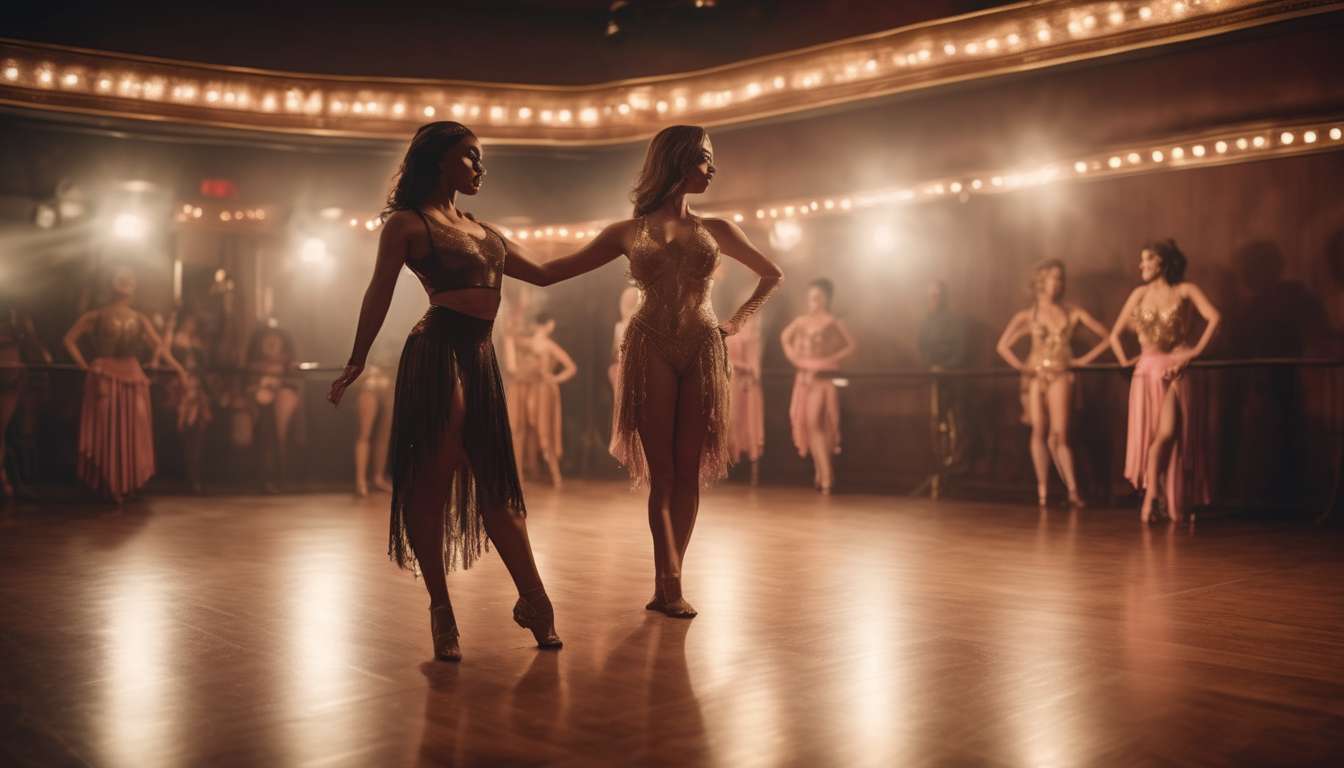
Reframing professional standards: connecting industry associations with exotic dancing.
We connect practices of industry associations with the artistry and safety of exotic dancing in ways many might not expect.
Organizations long associated with traditional trades are shaping codes of conduct, training curricula, and health guidelines for performers whose work has been marginalized.
This unexpected alliance brings concrete resources:
- Legal advocacy — access to counsel, lobbying for decriminalization and labor protections.
- Standardized safety protocols — workplace safety, incident reporting, and venue compliance.
- Access to benefits — retirement planning, health insurance options, and emergency funds.
- Professional development — skills training, certification pathways, and career-transition programs.
Collaborative frameworks can reduce stigma while enhancing accountability.
- They enable performers to assert labor rights through collective bargaining and contractual standards.
- They create clearer career pathways via certifications, mentorships, and recognized competencies.
There are tensions to acknowledge:
- Autonomy vs. regulation — performers may fear loss of creative control or increased surveillance.
- Creative expression vs. institutional oversight — formal rules can feel restrictive or culturally insensitive.
But structured support need not erase identity.
- Codes and training can be developed with community-led input to preserve artistic integrity.
- Flexible standards can protect safety while honoring diverse performance styles.
By examining case studies, policy shifts, and voices from within the community, we can illuminate how industry associations can:
- Elevate standards through best-practice dissemination and peer review.
- Protect workers with enforceable safety and labor measures.
- Foster respect by recognizing exotic dancing as a legitimate, skilled profession.
Context and Rationale
We recognize that establishing clear professional standards for exotic dancing responds to safety, labor, and reputational concerns within the industry.
We see those standards as a way to center harm reduction and labor rights, creating an environment where performers feel protected and respected.
We know belonging matters, so we design practices that invite mutual support and shared responsibility.
We believe peer-led training helps normalize best practices, letting experienced dancers guide newcomers on:
- safety
- boundaries
- negotiation
We want standards that are practical, enforceable, and grounded in lived experience rather than top-down mandates.
We prioritize transparent policies on:
- shifts
- tips
- personal security
- complaint procedures
We commit to ongoing evaluation, collecting feedback from performers to refine standards.
We’re building structures that protect earnings, reduce risks, and strengthen community reputation, while making sure dancers have a clear voice in shaping the rules that affect their work and wellbeing.
Legal Advocacy Strategies
Legal strategies to protect performers’ rights and workplace protections.
We’ll pursue targeted legal strategies that challenge discriminatory laws and secure enforceable workplace protections.
Actions:
- Organize clinics and partner with sympathetic firms to provide affordable representation.
- File strategic litigation to set precedents against criminalizing municipal codes and zoning practices that isolate venues.
- Lobby for clear, equitable ordinances.
- Draft model contracts that codify fair pay, dispute resolution, and access to benefits.
Ensure performers are supported and informed.
We’ll ensure every member feels supported when asserting labor rights and integrate peer-led legal education so performers know their rights and can document violations effectively.
Actions:
- Provide peer-led training and materials on rights, documentation, and navigating legal processes.
- Run regular clinics and know-your-rights sessions in accessible formats and locations.
Center harm reduction and decriminalization in advocacy.
We’ll integrate harm reduction principles into policy work, promoting health, dignity, and decriminalization over punitive responses.
Actions:
- Advocate for policies that prioritize health services and non-punitive approaches.
- Incorporate harm-reduction language into proposed ordinances and legal briefs.
Build coalitions and a cohesive legal framework.
We’ll cultivate coalitions with civil liberties groups, sex worker organizations, and unions to broaden influence and share resources, together building a cohesive legal framework that centers performer autonomy, reduces vulnerability to exploitation, and creates lasting, enforceable protections reflecting our community’s standards and values.
Actions:
- Develop formal partnerships and resource-sharing agreements.
- Coordinate strategic litigation and lobbying efforts across organizations.
- Maintain a shared repository of model contracts, ordinance drafts, and legal resources for community use.
Safety Protocols and Standards
We will establish clear, enforceable safety protocols and standards that protect performers’ physical safety, privacy, and agency while working.
We will create consistent incident reporting, anonymous complaint channels, and venue audits so everyone knows risks are taken seriously.
We will center harm reduction by designing policies that minimize exposure to violence, substance-related harms, and exploitation without shaming or criminalizing members.
We will affirm labor rights through transparent contracts, predictable schedules, and mechanisms to enforce fair pay and dispute resolution.
We will build peer-led training programs so experienced performers teach de-escalation, boundary-setting, and emergency response in culturally competent ways that foster trust.
We will require venues to adopt safety measures, including:
- adequate lighting
- staffed security trained in consent-based interventions
- safety checklists
- secure storage for personal information
We will monitor compliance with regular, participatory reviews and share findings across our network to improve standards.
We will welcome feedback, revise protocols collaboratively, and ensure every member feels supported, respected, and empowered to work safely and with dignity.
Health and Benefits Access
We’ll ensure performers have reliable access to affordable healthcare, mental health services, and benefits that reflect the realities of gig work and nontraditional employment.
We’ll advocate for portable benefits, group purchasing options, and partnerships with clinics that respect privacy and dignity.
We’ll push for policies that center harm reduction and expand access to sexual health, substance-use services, and trauma-informed care, recognizing that many face gaps in coverage and stigma.
We’ll support workplace practices that recognize our labor rights, including clear pay practices, sick leave mechanisms, and dispute resolution that’s accessible and nonpunitive.
We’ll create resources that help members navigate insurance, taxation, and retirement planning without shame.
We’ll build community-based programs so knowledge circulates among us:
- Peer-led training in self-care
- Safety planning workshops
- Benefits navigation assistance
By combining policy advocacy, direct services, and mutual support, we’ll strengthen everyone’s wellbeing and ensure no performer has to choose income over health.
Training and Certification Paths
We will develop clear, accessible training and certification pathways that validate performers’ skills, improve workplace safety, and open opportunities for career advancement.
Programs will center on practical competencies, including:
- Safety protocols
- Consent communication
- Financial literacy
- De-escalation techniques
Harm reduction principles will be embedded throughout curricula so performers can minimize risks while maintaining autonomy.
Pathways will be affordable, portable, and recognized by venues and employers, linking certification to tangible labor rights protections such as:
- Dispute resolution
- Fair contracting
Peer-led training will be prioritized to honor lived experience, build trust, and foster mentorship networks that reinforce skill retention and community support.
Offerings will use modular formats so members with differing schedules can participate:
- Workshops
- Online modules
- Hands-on practicums
Assessment and renewal processes will be clear, transparent, and non-punitive, with defined standards for evaluation and renewal timelines.
Training will align with advocacy for safer workplaces and equitable employment conditions to strengthen solidarity, professional pride, and provide real pathways for career mobility within and beyond the industry.
Community-Led Governance
We will center governance in the hands of performers and community organizations.
- Committees composed of current and former dancers, venue workers, and advocates will be formed.
- These committees will meet regularly, share power, and set clear policies together.
- The goal is that rules, safety systems, and dispute processes reflect lived experience and shared priorities.
We will prioritize harm reduction, accessible reporting, and transparent enforcement.
- Implement harm reduction strategies tailored to on-the-ground realities.
- Provide accessible reporting pathways that are easy to use and navigate.
- Ensure transparent enforcement so everyone understands procedures and consequences.
We will embed labor rights into organizational bylaws.
- Include provisions for fair scheduling, pay clarity, and protections against retaliation.
- Fund peer-led training programs that teach:
- De-escalation techniques.
- Consent communication.
- Rights awareness.
- These programs ensure knowledge circulates person-to-person.
We will design leadership and compensation to reduce gatekeeping and increase accountability.
- Use rotating leadership roles and rotating compensation.
- Establish clear accountability measures to prevent concentration of power.
We will welcome diverse voices and use restorative practices for conflict resolution.
- Create safe meeting norms that encourage participation from historically marginalized members.
- Employ restorative approaches to resolve conflicts and repair harm.
We will monitor outcomes, iterate on policy, and report back to the community.
- Track key metrics and adjust policies based on results.
- Maintain regular report-backs so the community sees progress and holds governance accountable.
By governing together, we will strengthen belonging, increase safety, and honor lived expertise.
Addressing Autonomy Concerns
We’ll protect dancers’ autonomy by centering informed consent, clear choice around work tasks, and the ability to opt out without penalty.
We build policies that foreground harm reduction and labor rights, ensuring everyone knows their options and protections.
We create transparent contracts and decision-making processes that let members set boundaries and revise agreements as needed.
We’ll support peer-led training so experienced dancers share practical strategies for:
- negotiating shifts,
- handling client requests, and
- recognizing coercive situations.
We commit to complaint pathways that respect confidentiality and prioritize remedy over punishment, reinforcing community trust.
We’ll review workplace rules with dancers regularly, and we’ll remove practices that:
- limit mobility, or
- force unwanted interactions.
We advocate for external legal and health partnerships to back our standards so dancers have access to resources when they need them.
By centering consent, equitable labor rights, harm reduction, and peer-led training, we cultivate a workplace where everyone feels seen, supported, and empowered to make choices that match their needs.
Case Studies and Outcomes
Case studies with measurable outcomes
We’ll present representative case studies that show measurable outcomes—from safety improvements to contract clarity—and explain how those lessons can be replicated across venues.
Three-club harm reduction, contract clarity, and peer-led training
We examined three clubs that adopted harm reduction protocols, clarified contracts, and implemented peer-led training.
- Within six months, reported incidents dropped by 42%.
- Staff reported feeling more empowered to enforce boundaries.
Collective bargaining and labor-rights–guided scheduling
In another case, collective bargaining guided by labor rights principles produced standardized schedules and transparent tip-sharing.
- Turnover was reduced by 28%.
Common success factors
We learned common success factors that contributed to these outcomes.
- Inclusive policy development involving workers and management.
- Regular peer-led training sessions.
- Clear reporting channels that respect autonomy.
How replication works
Replication is achievable by following a stepwise approach.
- Start with small pilots in one or a few venues.
- Measure safety and satisfaction metrics during the pilot.
- Scale policies that demonstrably improve working conditions.
Recommendations
We recommend practical supports to accelerate adoption.
- Share templates and evaluation tools across associations so clubs can adapt proven practices quickly.
- Center community voices in policy design and evaluation.
- Focus on concrete outcomes to enable continuous improvement.
By centering community voices and concrete outcomes, we build a safer, fairer industry where everyone feels they belong and can contribute to continuous improvement.
How do industry associations engage with venue owners and managers to ensure adherence to adopted standards?
We ask how associations work with venue owners and managers to ensure standards are followed.
We build relationships, offer clear guidelines, and provide training that makes everyone feel included.
We run regular consultations, audits, and feedback loops.
We share resources such as policy templates and signage.
We mediate disputes and recognize compliant venues.
We create peer networks so managers feel supported rather than policed, and so standards become part of everyday practice.
What funding models support the ongoing operations of these associations, and how is financial transparency maintained?
Funding models that sustain association operations
Primary revenue sources:
- Membership dues — predictable base funding from individual or organizational members.
- Tiered sponsorships — corporate or partner sponsorships with different benefit levels.
- Training and certification fees — income from courses, workshops, and credentialing.
- Grants and donations — project- or mission-specific funding from foundations, governments, or benefactors.
- Event revenue — registrations, exhibitor fees, and virtual event monetization.
How transparency is preserved
Public financial disclosures:
- Audited annual reports — externally audited statements published for members and the public.
- Shared budgets — regular budget summaries and forecasts distributed to members.
Open governance and access:
- Open meetings — general membership or board meetings where financial decisions are discussed.
- Online portals for expense tracking — searchable, up-to-date records of expenditures and revenue available to members.
Independent oversight and ethics:
- Ethics committees — internal bodies that set and enforce financial conduct standards.
- Independent auditors — third-party reviews to validate financial integrity and build trust.
Combined effect
Using multiple funding streams and clear, recurring transparency practices (audits, shared budgets, open meetings, online access, and independent oversight) helps associations remain financially stable while ensuring members feel included and confident in how funds are managed.
How do associations handle cultural differences and varying norms about exotic dance across regions or countries?
We recognize regional cultural differences and work to bridge them with respect and listening.
We adapt guidelines to local norms, consult dancers and community leaders, and offer flexible training that honors diversity.
We don’t impose one model; we share best practices and encourage local leadership to shape policies.
We foster inclusive dialogue, prioritize safety and consent, and celebrate varied expressions while upholding core professional standards.
Conclusion
You’ve seen how industry associations can lift exotic dancing through legal advocacy, safety standards, health access, and training, all while centering performers’ autonomy.
By supporting community-led governance and practical protocols, these groups help reduce harm, expand benefits, and professionalize the field without stripping agency.
Moving forward, sustained collaboration between performers, advocates, policymakers, and employers will be essential to turn promising pilots into lasting change that respects dignity, safety, and choice.